Ця сторінка мовою: Українська.
Доступна версія мовою: English.
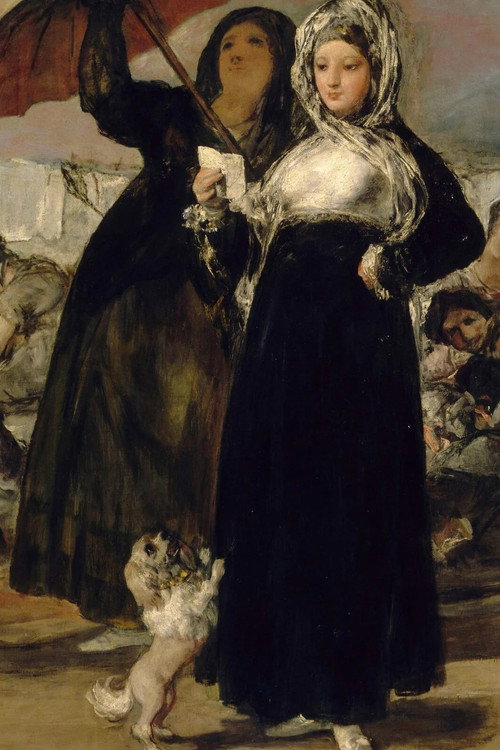
Francisco de Goya « La Lettre, la Flèche et le Balai »
- 29 хв
- 1 січня 1992 р. · Франція
Опис
Why have these two paintings, The Young Women and The Old Women, always been presented together? Historical investigation does not provide an answer. Alain Jaubert then sets out to follow the trail, patiently gathering clues: both paintings depict a lady and her servant. But while in The Young Women a “maja” is shown in a street scene that seems to belong to the European literary tradition, in The Old Women, Goya portrays an aging coquette and her servant, rendered as caricatures. The diamond arrow worn by the coquette is a clue that helps interpret these two paintings... As this “audiovisual autopsy” unfolds, the works come together to form a kind of fable about destiny—both that of Spain, devastated by the Napoleonic wars, and that of the painter himself, aged and disillusioned, who finds renewed energy in a new love.
Деталі
- Статус
- Випущено
- Дата виходу
- 1 січня 1992 р.
- Мова оригіналу
- французька
- Розмовні мови
- французька
- Країни
- Франція
- Виробництво
- Palette Productions
- Бюджет
- Немає даних
- Збори
- Немає даних